WhyElderLaw
How would you explain elder law to someone who is unfamiliar with the law?
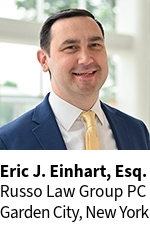 It is really challenging to explain because there are so many different aspects to it. A lot of times in social settings, people ask, “What do you do?” When I say, “I’m an elder law attorney,” the next question is usually, “What is that?”
In the simplest sense, elder law attorneys look to maintain the dignity and protection of older adults. That can involve long-term care planning, helping people qualify for means-based government benefits, and helping them sort through long-term care options. It can also mean preserving their dignity through advance directives or guardianship proceedings. Or it could relate to financial exploitation of older adults or other kinds of abuse.
Elder law is not just one thing; it is not a monolith. Depending on who is willing to listen, you can try to explain what is involved. But in a social setting, I usually say that it is about protecting the needs and dignity of older adults.
When did you know you wanted to become an elder law attorney?
I became interested in the practice of elder law because of two really amazing mentors.
The moment I realized I wanted to practice elder law was during a Q&A session of a New York Times panel discussion on aging. Vincent Russo, who later became my managing partner, was the only elder law attorney on the panel. At the time, I was there because he was my future father-in-law. He knew I was applying to law school and thought the discussion would be helpful. At the end of the discussion there was a Q&A, and question after question was related to the law. Seeing Vincent’s ability to take complicated and overwhelming concepts and break them down into plain English, I thought, “Gee, I want to do that.” I wanted to help people alleviate their concerns and their fears.
When I was exploring law school options, Vincent asked Peter Strauss, who is a professor at New York Law School, to give me a tour of the school. Professor Strauss was and is an elder law attorney and was one of the founders of NAELA. Professor Strauss hooked me. He was so kind and knowledgeable, and the way he described the practice of elder law really resonated with me. He helped me realize that it was the type of practice I could make a living at and do good for others.
I went to New York Law School and took Professor Strauss’s elder law courses. He was also the moderator for the elder law clinic, which he insisted I join. The elder law clinic got me out into the court observing guardianship hearings and into the community meeting older folks at nursing homes and assisted living facilities. It was a good fit for me as a person, and it was intellectually rewarding. Elder law has the most complex situations that deal with ethics, taxes, issues of capacity, and federal and state regulations. If you want a really good bar exam question, ask an elder law attorney to describe what they did at work that day. We are thinking through issues on multiple levels. That’s why I decided to focus my practice on elder law — and why I stay in it.
How have you gotten involved in elder law since you first knew you wanted to enter this field?
I clerked for elder law firms during law school and then joined Vincent’s law firm (Russo Law Group, P.C.) as an associate after graduating law school. Since our firm focuses on estate planning, elder law, and special needs planning, I’ve been able to continue in the practice area since then.
I got more involved at the national and state levels through NAELA. I was a student member of NAELA until I was no longer a student, and then I got a chance to attend an annual NAELA meeting in Colorado in 2016. I immediately saw the value of connecting with like-minded people, not just locally but across the country. When I got back from the meeting I dove right into volunteering at NAELA.
I volunteered on the Tax Steering Committee and then joined the NAELA News Editorial Board. I threw myself into NAELA News and eventually became Editor-in-Chief. That was huge for me. One of the things I loved about NAELA News is that I got to meet and work with really smart people and learn different topics — things that never came up in my practice, either because they were not relevant or because of differences in state laws, rules and regulations, or technology.
I became more involved in NAELA because it gave me a chance to connect with other elder law attorneys and acquire new skills and knowledge. I saw this as a tremendous value to me as an attorney and a person.
What brings you joy in your work?
At NAELA, it’s the people. I love working with my colleagues and NAELA staff. They are professional, brilliant, and kind-hearted. In other areas of the law, you don’t often meet people who get emotionally invested in their clients the way that we do. We go into nursing homes and hospitals to meet with clients. Sometimes we meet with them as they are dying or just after they’ve received a devastating diagnosis of a chronic illness. We work with their families as they are dealing with issues of caregiver burnout. NAELA members are tremendous people, so that is what brings me joy — interacting with them.
It also brings me joy to know that I can help clients and their families make sense of things during a really challenging time in their life. If I can help unburden them a little and give them peace of mind, that is a truly joyful experience.
How has elder law grown as a field during the time you have been in it?
I’ve been practicing for 13 years, and while elder law has existed since the mid-to-late 1980s, it has evolved meaningfully during my tenure so far.
First, the legal and regulatory landscape is constantly shifting. Changes in federal and state law directly affect our field because they alter the planning tools available to us. Elder law is highly policy-driven, so even incremental statutory or regulatory adjustments can significantly reshape practice.
Second, the culture around autonomy and capacity has changed. Movements like the Free Britney case brought national attention to guardianship and decision-making rights. Issues we confront every day — questions of capacity, autonomy, and protection — are now part of a broader public conversation. Developments such as the updated ABA Model Rule 1.14 also reflect a growing effort to reduce discrimination and better support clients with cognitive or mental health disabilities in accessing legal services.
Technology has also had a substantial impact. The accessibility of online information and the rise of AI have changed how clients approach legal issues. Some people try to “Google” their way to Medicaid eligibility without understanding the layered and sometimes severe consequences of missteps. I don’t believe technology will eliminate the need for elder law attorneys, but it does require us to adapt and think carefully about how we deliver services.
Finally, the demographic reality cannot be ignored. The population has aged significantly since I began practicing. That alone has increased demand and heightened the urgency of the issues we address every day.
What do you consider the most pressing issues of elder law today?
For our practice, I think the most pressing issue is a lack of awareness of what we do and how we can help people.
For our clients, I think financial exploitation of older adults is probably the most pressing issue. It is rampant and devastating, and it needs to be taken seriously. There are a few bipartisan pieces of legislation at the federal level that will hopefully help. And I believe most states and federal agencies are addressing it, but within the broader community, it needs to be talked about more openly.
What is your hope or vision for the future of elder law?
I’d like to see much greater awareness of elder law as a practice area. There’s still a basic misunderstanding about what we do and how it benefits families. The need is significant, but the public doesn’t always recognize it. Ideally, elder law would be widely understood and treated as a core subject in law schools, not a niche. The more people understand what elder law is and what we do, the better positioned we are to help them.